Thursday, 8 March 2012

Where the $%@^ are my moonbootins?

Send an Ash-tronaut to space!

As you can see, I have entered a contest. The link above will take you to the submission and "vote" screen. I need to get "likes".

First off, I am Ashley Hughes, and I am one of the Ash-tronauts. Ashlea Spitz and I have been training for our N-ASH-A (get it) space mission for over 2 years by rappelling down skyscrapers and hanging out in -110 degree ice saunas (colder than the atmosphere). We eat space food at our parties and listen to satellites and planets via radio telescopes, but with all of our education we also became aware about space debris. SPACE JUNK! Both of us are highly active in volunteering with the environment in our community but we won't stop at just earth. There are an estimated $300 billion dollars (US$) of space junk in lower earth orbit. Each time a satellite collides with another, hundreds of thousands of pieces of space junk, from paint chips to space stations, crowd our atmosphere. These particles will forever collide becoming smaller pieces, eventually maybe creating a ring around earth and inhibiting space exploration. Lets raise awareness for Space recycling and send an ashtronaut to space!

Saturday, 3 March 2012

He, is most Noble.

Last night, our discussion was around a Nobel prize winner, and the world's dwindling supply of helium (He).

It’s the most Noble of gases, meaning it’s very stable and non-reactive for the most part. It is created by the radioactive decay of terrestrial rock and most of the world's reserves have been derived as a by-product from the extraction of natural gas.

Some stars show us the way


Both hydrogen and helium, the first two elements on the Periodic Table are very abundant in the universe (about 92 percent and about 8 percent of the atoms, respectively). Helium is rare on Earth while hydrogen is abundant. Helium does not combine with other atoms while hydrogen does. Hydrogen is one of the two elements that make water. Under standard conditions, there are no combined or molecular forms of helium. Helium is non-renewable and irreplaceable. Its properties are unique and unlike hydrocarbon fuels (natural gas or oil), there are no biosynthetic ways to make an alternative to helium. All should make better efforts to recycle it.

Helium plays a role in nuclear magnetic resonance, mass spectroscopy, welding, fiber optics and computer microchip production, among other technological applications. NASA used large amounts annually to pressurize space shuttle fuel tanks. Helium’s use in science is extremely broad, but its most important use is as a coolant. Liquid helium is vital for its use in cooling the superconducting magnets in magnetic resonance imaging (MRI) scanners. There is no substitute because no other substance has a lower boiling point. Helium is also vital in the manufacture of liquid crystal displays (LCDs) and fiber optics.


But as you may have gathered, I tend to dream big. A couple years ago, I was discussing mining helium from the moon with a colleague. It used to seem far fetched, but now that civilians are undergoing "vacations in the stratosphere", more frequently our conversations drift to mining on asteroids and the moon. Speaking of other planets, another place where helium occurs naturally is, of course, in the gas balls we call stars. Researchers think that the solar wind from our sun may have deposited some helium-3 on the moon’s surface. If we use that up too, we could look a little further, say Uranus or Neptune, which have helium-rich atmospheres.

“The moon is the El Dorado of helium-3,” says [futurist Marshall] Savage, and he’s right: Every star, including our sun, emits helium constantly. Implanted in the lunar soil by the solar wind, the all-important gas can be found on the moon by the bucketful. Associate professor Tim Swindle and his colleagues at the Lunar and Planetary Laboratory at the University of Arizona have already begun prospecting. Swindle has mapped likely helium-3 deposits on the moon by charting the parts of the lunar landscape most exposed to solar wind against the locations of mineral deposits that best trap the element. [Wired] 


Back on earth, due to America's push to sell off all of its helium reserves by 2015, Russia will be the world’s next major source of helium. Russia also has the world’s largest reserves of natural gas, where helium certainly exists. During the retrieval of natural gas, helium is secondary and much of it is wasted. Due to fracking, the helium is quenched (released into the atmosphere), and there is no chance to retrieve it once its gone.


DLA Energy just increased its helium orders from one firm, Dubai-based Global Gases, by 50 percent — from two million cubic feet to three million. Phil Kornbluth, an executive vice president with Global Gases supplier Matheson Gas, says it’s a substantial increase.
This post is dedicated to methanex, but more specifically Ken Vidalin. I am also going to mention Leo Hathaway, a geologist, just for FUN, silly. 


Wednesday, 1 February 2012

Human relations 101


The least important word: I 
The most important word: We 
The two most important words: Thank you. 
The three most important words: All is forgiven. 
The four most important words: What is your opinion? 
The five most important words: You did a good job. 
The six most important words: I want to understand you better. 

Ashley Hughes embarking on another adventure. This time it's aerobatics in a glider. Flying loop-the-loops.


Thank you very much for believing in my weirdness.

Wednesday, 12 October 2011

Auroral Phenomena.


Happy birthday to me.

Aurora Borealis (or the northern lights), named after the Roman goddess of dawn, Aurora, and the Greek name for the north wind, Boreas, by Pierre Gassendi in 1621.

In Finnish Lapland you'll find Igloo Village, part of Hotel Kakslauttanen. Igloo Village is a very unique ice hotel and is quite popular among adventurous Finland travelers looking for a night in a real igloo. You can book your own igloo here between December and April and stay in: snow igloos for an authentic arctic experience, traditional rustic log cabins, or warm glass igloos to watch the Northern Lights (Dance of the Spirits) from your bed.


Upper Echelon, strategic and international studies


Wednesday, 21 September 2011

Censoring art, by Facebook

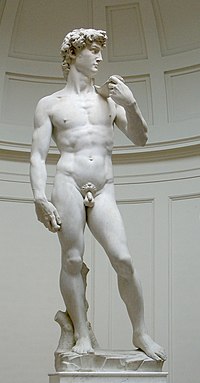
I am fond of art, but have an affinity for fine sculpture. I came across the above statue, in Saint Tropez, and snapped a quick photo of it. I had uploaded it to my facebook account, and when I logged in, I had a very stern message telling me I had violated some clause by posting nudity. Even though I have a photo of Michelangelo's David. What do you think? Is posting a piece of art violating Facebook?

I have removed the photo, for now.

Sunday, 28 August 2011

Be humble, for you are made of earth. Be noble, for you are made of stars.


Humans have always yearned to explore new lands; it would seem a sense of adventure is innate. I long to explore new lands, new cultures, new worlds.


Detection of another intelligent species would be the most profound event of our lifetimes, if not all of human history.

I have always been a big believer in SETI. If you are too, visit SETIstars.org today to help via private donations from the public. 

Some stars show you the way.


Wednesday, 24 August 2011

Truth is stranger than fiction.


Go confidently in the direction of your dreams. Live the life you have imagined. Be grateful for friends, family and future.


Upper Echelon, strategic and international studies
Ashley Hughes Vancouver, Upper Echelon, Bing, Yahoo, Facebook, twitter, dirty, clean, business, consulting, lady ashley hughes vancouver, ashley hughes,

Tuesday, 23 August 2011

Chilled, over ice, on the rocks


A lady isn't afraid to try new things. Ashley Hughes going into a -110 degree celsius ice sauna that's colder than the atmosphere. 


Every once in awhile, something unknown or an unusual opportunity presents itself. I like to analyze the pros and cons, and if the outcome is positive, I am usually keen to try anything a little daring... especially when after closer examination, it is actually beneficial and good for your body.

At -110 degrees, your breath turns to snowflakes.

Here David and I go into the -110 degree sauna for 3 minutes... colder than our atmosphere... which is great if I plan to go to space...


Monday, 22 August 2011

Not exactly roughing it.

A portrait of a lady: Ashley Hughes is not exactly roughing it at Beaver Creek Resort.


Beaver Creek is a feast for the eyes, a delight for the senses. The influence of renowned resorts such as Switzerland's St. Moritz, Italy's Cortina, and Spain's Val d'Aran led to the creation of a unique mountain resort full of excitement and village luxury. It also feels a bit like Whistler, BC.

It is a lovely place to visit. It's slogan: not exactly roughing it


Monday, 15 August 2011